The Daytime Mosquito in Fresno: Aedes Aegypti and What Actually Controls It
Aedes aegypti, an invasive container-breeding mosquito, is established in Fresno and bites during the day.
Read the Guide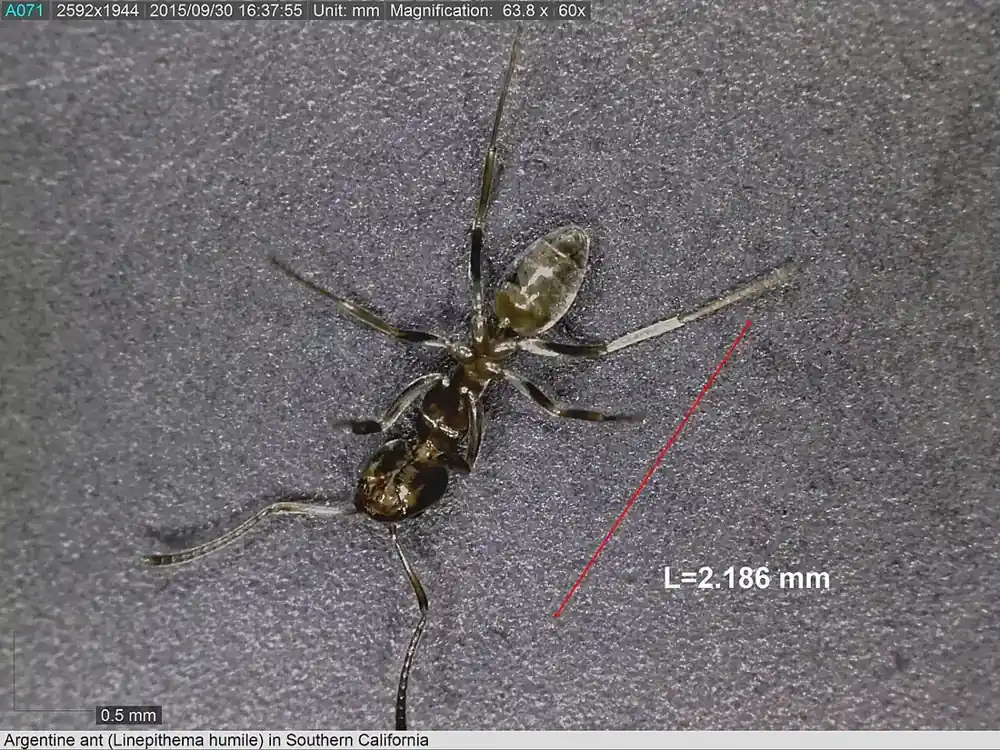
Argentine ant colonies stream into Fresno homes every summer looking for water.
Problem: Argentine ant colonies stream into Fresno homes every summer looking for water.
Solution: Colony-level baiting plus exterior treatment - not indoor sprays, which split colonies.
When to call: Call when trails appear at multiple water sources or return within days of cleaning.
Every Fresno summer starts the same way: the first real heat arrives, the sprinklers ramp up, and a thin line of small ants appears at the kitchen sink. These are Argentine ants, the dominant ant of the Central Valley, and understanding how they live is the difference between a weekend of spraying and an actual solution.
The city itself adds pressure. Fresno is the county seat and the largest city in the Valley, with neighborhoods that range from 1920s historic districts to subdivisions still being framed at the city edge - and every era of housing has its own pest profile, from drywood termites in old eaves to field rodents at the construction frontier.
Argentine ants are not like other ants. Instead of one nest with one queen fighting every other nest, they run cooperative networks - many nests, many queens, spread across whole blocks, sharing workers and food. Fresno's irrigated yards give them everything: moist soil for nesting, aphid honeydew on citrus and shrubs for sugar, and insects for protein.
That network is why a single yard can be invaded from three directions at once, and why the ants you kill today are replaced by tomorrow. The colony is not in your kitchen. Your kitchen is a watering stop on the colony's map.
Argentine ants forage indoors in every season, but summer turns the trickle into a flood. When afternoon soil temperatures bake past comfort - a normal Fresno July - the colonies hunt water aggressively, and a home offers it everywhere: sink traps, dishwasher seals, water heater pans, pet bowls, AC condensation.
Irrigation cuts both ways. The same watering that keeps their outdoor nests alive also floods them after deep cycles, sending workers up the foundation and into wall voids within hours. Ant invasions that follow watering days are a signature Fresno pattern.
The instinctive fix - spraying the trail - is the one thing Argentine ants are built to survive. Repellent insecticides do not kill the colony; they alarm it. Argentine colonies respond to stress by budding: queens and workers split into new satellite nests, so one problem in the kitchen becomes three problems in three rooms a month later.
Store-bought bait has a subtler problem. Argentine colonies shift food preferences with the season - sugar in one month, protein in another - and a bait they ignore does nothing while the trail keeps flowing. Effective baiting matches the bait to what the colony is eating now.
Working ant control in Fresno is a system: identify the species, bait the colony network so workers carry the active ingredient back to the queens, treat the exterior nesting zones along foundations and sprinkler lines, and cut the indoor pull by fixing leaks and moving pet food. Activity often rises briefly as foragers hit the bait, then collapses as the nests fail.
The exterior is where the war is won. Trails are treated where they originate - garden beds, sidewalk edges, tree bases and irrigation boxes - so the pressure stops at the property line instead of at your sink.
Argentine ants do not respect property lines, which creates a Fresno-specific frustration: your yard can be treated perfectly and still host foragers from the untreated network next door. This is why ant work here is sold as a rhythm, not an event - each visit knocks the network back, and the homes on regular service are the ones whose kitchens stay quiet while the block's pressure rises and falls around them.
It also explains the pattern homeowners notice: the worst ant homes sit next to the richest ant habitat - the overwatered lawn, the aphid-heavy citrus, the rental with the leaking hose bib. You cannot treat your neighbor's yard, but a tight exterior barrier plus zero indoor water access makes your home the least attractive stop on the route.
Argentine ants are not just a pest - they are pest infrastructure. By farming aphids and scale on citrus and ornamentals for honeydew, they protect the insects that damage your trees. By dominating outdoor food sources, they push other insects toward the house. And where ants own the ground floor, spiders and other predators gather at the edges to eat them.
That is why ant control so often shows up inside a general service plan rather than alone: the same visit that baits the ant network also treats the spiders hunting it, the roaches competing with it and the entry points all of them use.
Ant control fails in Fresno for one reason above all: people treat the visible ten percent. The trail in the kitchen is a commute, not a colony, and killing commuters with contact spray mostly teaches the colony to split, reroute and re-enter somewhere less visible. Argentine ant networks are polydomous - many nests, many queens, one vast shared workforce - which is why bait transfer through the network outperforms barrier killing for this species.
That is the service side of this guide's problem. When you are ready, the Ant Control page carries the process, the coverage by neighborhood and the number to call.
Note where ants enter, what they are feeding on and which water sources they use - this drives bait choice.
Bait stations go on the active trails indoors and at exterior nesting zones, matched to the colony's current food preference.
Foundation lines, beds, sidewalks and irrigation zones are treated where the nests actually are.
Leaks fixed, pet food sealed, aphid shrubs washed - then trails are checked until activity stops.
Hose bibs, irrigation heads, AC condensate and pet water - note every drip and puddle against the foundation.
Trace a kitchen trail back through the wall void to its outdoor route before treating anything.
Sticky leaves and sooty mold mean aphids are feeding the colony you are fighting.
Gaps at plumbing and conduit entries get caulk or copper mesh, not hope.
Bait and barrier visits on schedule through September - the network respects consistency, not intensity.
Ant control cost turns on network size and access: a single-yard problem with good exterior access is one job; a block-scale network entering at five points is another. Interior-only service is cheaper per visit and more expensive per year, because it never touches the colony. The honest quote separates the baiting program, the barrier work and the water fixes on your side - each priced by scope, not by the square footage of your kitchen.
A professional ant visit in Fresno looks methodical because it is. The technician starts outside, finds the trails and follows them to the network's infrastructure - the irrigated beds, the aphid shrubs, the fence-line highways - before touching anything indoors. Bait placements go where foragers actually travel, in stations and cracks the spray cannot reach, and the exterior barrier closes the wall voids behind them. You will hear as much about your irrigation schedule and your citrus as about the treatment itself, because for this species the landscape is half the prescription. The visit ends with a rhythm, not a farewell: summer pressure gets summer scheduling.
It kills commuters and splits the colony - the network reroutes and returns in new places.
The colony lives outside. Indoor-only efforts mop while the tap runs.
Irrigation washes barriers and refreshes the very moisture pulling ants in.
Argentine networks rebuild. A single visit is a haircut, not a solution.
Aphid honeydew is colony fuel. Untreated shrubs feed the invasion daily.
Fresno summers belong to the Argentine ant, but your kitchen does not have to. The homes that win this fight treat it as what it is - an outdoor network problem with an indoor symptom - and they start in June instead of surrendering in August. Dry the stops, bait the network, keep the rhythm. By the time the Valley cools, the trails that owned your counters will be a story you tell about last summer.
Aedes aegypti, an invasive container-breeding mosquito, is established in Fresno and bites during the day.
Read the GuideSubterranean and drywood termites are both active across Fresno, most of the year.
Read the GuideSprays kill foragers and stress the colony into budding - splitting into more nests. The queens and the outdoor network survive untouched, so the trails return, sometimes in new places.
Most homes see activity collapse within one to two weeks. Bait has to travel through the network nest by nest, which is slower than a spray - and is exactly why it works.
They do not bite or damage wood, but they contaminate food, invade in huge numbers and protect aphids that damage garden plants. Their real cost is persistence.
Indoor trails point at water surprisingly often: a slow trap leak, a sweating pipe, irrigation overspray against the foundation. Finding and fixing the water source is part of lasting control.
Colony networks grow every year they are left alone, and hotter, drier stretches push them harder toward indoor water. A yard treated at the network level stays quiet while untreated neighbors get worse.
One call connects you with a pest control professional serving Fresno and the surrounding Valley communities - inspection, treatment, exclusion and prevention.
📞 Call Now