Black Widows in Fresno Garages and Woodpiles: A Safety Guide for Homeowners
Black widows are a normal part of Fresno garages, woodpiles and block walls.
Read the Guide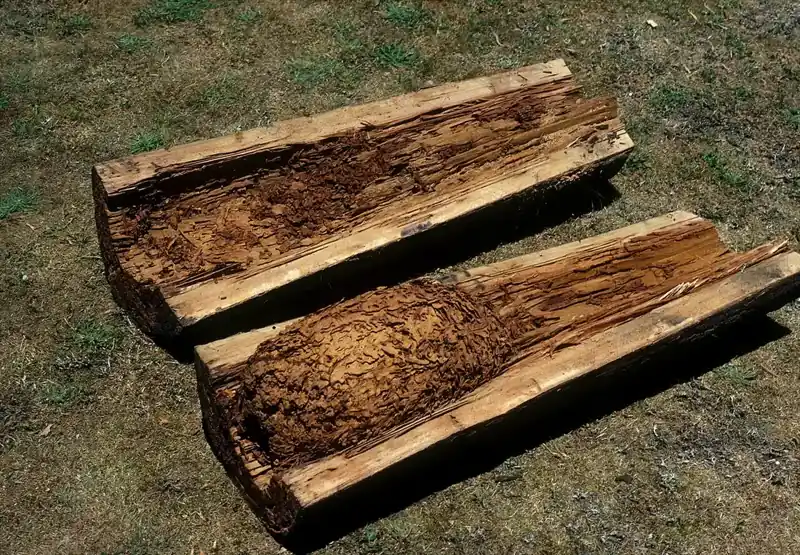
Subterranean and drywood termites are both active across Fresno, most of the year.
Problem: Subterranean and drywood termites are both active across Fresno, most of the year.
Solution: Spot the evidence early - tubes, pellets, wings, hollow wood - and get a documented inspection.
When to call: Call when you find any of these signs, or before buying, selling or remodeling.
Termites are the quietest expensive problem a Fresno home can have. They do not scurry, sting or scratch - they eat, silently, inside the wood you cannot see. The homeowners who catch them cheap are the ones who know what the evidence looks like.
The city itself adds pressure. Fresno is the county seat and the largest city in the Valley, with neighborhoods that range from 1920s historic districts to subdivisions still being framed at the city edge - and every era of housing has its own pest profile, from drywood termites in old eaves to field rodents at the construction frontier.
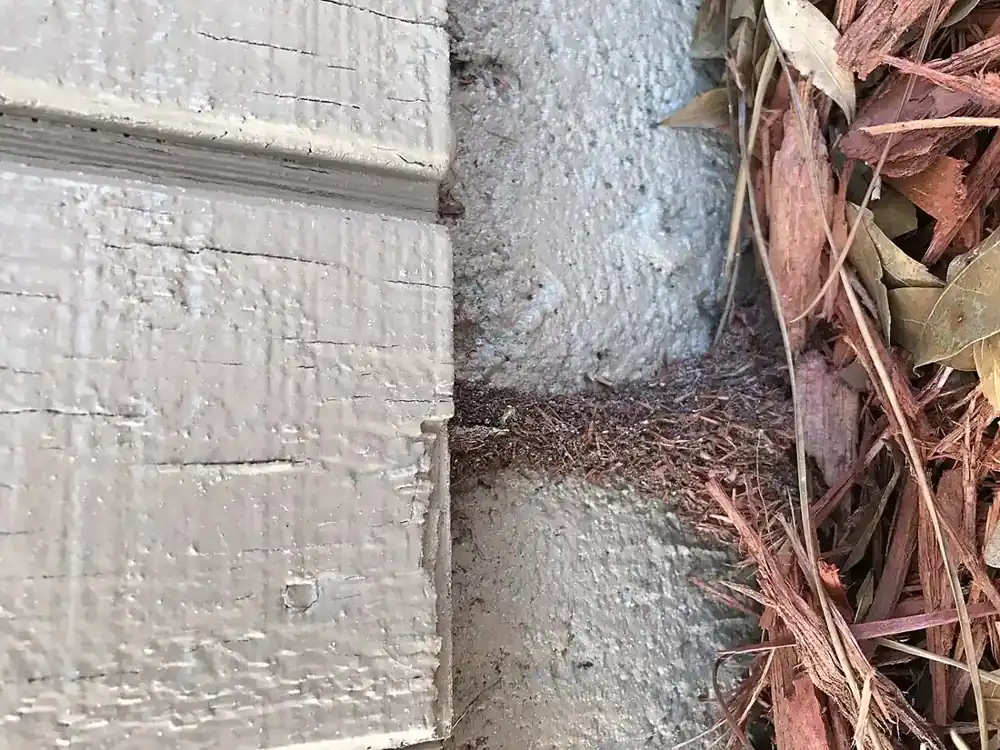
Subterranean termites live in the soil and dry out fast in open air, so they build their own covered highways: pencil-thin tubes of mud running up foundation concrete, stucco and piers. You will find them at the slab edge, in the crawl space and behind anything stored against the house.
A tube means termites are commuting between a soil colony and your framing. Breaking a tube open and finding it rebuilt a week later means the route is active - but even an empty tube is a reason to schedule an inspection.
Drywood termites live inside dry wood and keep tidy houses - they push their droppings out of tiny kick-out holes. The result is a small pile of hard pellets, like coarse sand or ground pepper, on the sill or floor below eaves, window frames, attic wood or furniture.
The pinholes themselves are easy to miss; the pellet piles are not. If you keep sweeping up mysterious grit under the same window frame, you have found drywood termites.
Termite colonies announce themselves once or twice a year by swarming - releasing winged reproductives to start new colonies. Subterranean termites swarm on warm spring days, often after rain; drywoods fly on hot late-summer and fall evenings, drawn to lights.
The aftermath is the evidence most people find: piles of identical small wings on windowsills and in spider webs. Swarmers indoors are the serious version - they mean a colony is in or under the structure, not just in the yard.
Late-stage signs live in the wood: paint that bubbles or peels on frames and baseboards, wood that sounds papery and hollow when tapped, floors that feel soft, doors and windows that suddenly stick because their frames have been eaten out of square.
None of this evidence names its own culprit with certainty - carpenter ants and rot leave look-alikes, and old damage resembles new. That is exactly what a proper termite inspection is for: reading the evidence and writing down what it means.
The most common termite question in Fresno comes with a photo of damaged wood: is this old, or is it active? The honest answer is that wood alone rarely tells you. Old damage is dry, clean and quiet; active subterranean damage carries mud and moisture, and active drywood galleries produce fresh frass. But colonies can pause, move and return to the same wood years later.
That uncertainty is why inspectors probe, tap and trace rather than pronounce. A documented inspection separates the three findings that matter - active infestation, inactive old damage, and conditions inviting the next colony - because each one demands a different response and a different budget.
Inspectors in the Valley read the same checklist at every home: irrigation that wets the foundation, soil or mulch banked above the stucco line, wood fences and posts touching the structure, stored lumber and form boards on soil, leaky hose bibs and AC condensate lines, and attic vents open to fall swarmers.
Most homes fail two or three items on that list, and none of them is a catastrophe - they are invitations. Correcting them is the least expensive termite work there is, and it makes any treatment that follows last longer, because the next colony finds a drier, harder target.
Fresno sits in one of California's most active subterranean termite zones, and the Valley adds a second act: drywood colonies in the framing itself. The two problems behave differently enough that treating one while missing the other is a classic local failure. Subterranean work is about the soil barrier and the moisture that lets colonies reach the house; drywood work is about locating galleries in wood that may be twenty feet from the nearest soil.
That is the service side of this guide's problem. When you are ready, the Termite Control page carries the process, the coverage by neighborhood and the number to call.
Walk the slab edge and crawl accesses looking for mud tubes and wood-to-soil contact.
Check sills and attic wood for pellet piles and pinholes.
Spring days after rain, and hot fall evenings - note any wings or swarmers, indoors especially.
Have a termite inspection map the findings before you treat, repair or transact.
A hollow sound or a probe that sinks means the wood is a shell. Mark every soft spot.
Piles of identical wings at windows after a warm day are swarm evidence - save a few for identification.
Mud tubes on the foundation come down; if they are rebuilt within weeks, the colony is active.
Irrigation against the wall, a dripping bib, a wet crawl corner - termites shop where the water is.
Wood-to-soil contact at the fence line is the colony's public on-ramp to your house.
Nobody can honestly price termite work from a photo of one board, because the price lives in the map: how many locations, which species, how much damaged wood, and whether the fix is localized treatment, a full perimeter program or fumigation for widespread drywood. Inspections exist precisely to build that map before money moves. What a homeowner can control is timing - the same finding costs a fraction as much in year one as in year four.
A professional termite inspection is a hands-on survey, not a walkthrough with a clipboard. The inspector taps and probes baseboards, joists and window frames, opens the crawl space and the attic, reads moisture at the foundation line, and checks the classic Fresno invitations: irrigation at the wall, wood-to-soil contacts, stored lumber, fence lines touching the structure. Findings are recorded by location and type - subterranean or drywood, active or old, damage or condition - because each combination drives a different recommendation. The deliverable is the map; treatment decisions come after it, not before.
It hides the evidence an inspector needs and lets a colony keep its privacy.
Subterranean colonies can work for years without a swarm you happen to see.
Rebuilt tubes are the activity test. Knock them down - then check back.
A woodpile at the foundation is a colony's bridgehead with a welcome mat.
Treatment is a moment; the Valley's pressure is permanent. Re-inspection keeps findings small.
Termites are the slowest emergency in homeownership, and the most forgiving - if you look. Fresno's colonies give years of legible warnings before they give structural bills. Read the signs in this guide once a season, keep the moisture off the foundation, and let an inspector confirm what your eyes suspect. The homes that lose money to termites are never the ones that looked.
Black widows are a normal part of Fresno garages, woodpiles and block walls.
Read the GuideA Fresno home's pest history is negotiable information - if you document it before closing.
Read the GuideTermite swarmers have straight antennae, a uniform waist and two pairs of equal wings; ants have elbowed antennae, a pinched waist and unequal wings. The discarded wings piling on the sill are the easiest evidence to show an inspector.
One tube means subterranean termites have a route to your home. It does not tell you the colony's size or how long they have fed - that is what the inspection determines. Treat any tube as a schedule-the-inspection sign.
No. A drywood colony lives entirely inside its wood and keeps eating and expanding until it is treated or the wood is removed. Pellet piles grow, not shrink.
Slowly but constantly - a colony feeds every day, and damage is measured in months and years, which is why it is usually discovered late. It is also why catching activity in year one instead of year five matters so much.
In Fresno, yes - on a one-to-two-year rhythm. The most expensive termite damage is the kind that never showed a sign a homeowner could see, deep in framing and subfloor.
One call connects you with a pest control professional serving Fresno and the surrounding Valley communities - inspection, treatment, exclusion and prevention.
📞 Call Now