Roof Rats and Harvest Season: Why Fresno Attics Fill Up Every Fall
Harvest displaces field rodents; roof rats move into Fresno attics every late summer and fall.
Read the Guide
A Fresno home's pest history is negotiable information - if you document it before closing.
Problem: A Fresno home's pest history is negotiable information - if you document it before closing.
Solution: Order both a termite inspection and a general pest inspection; they answer different questions.
When to call: Call as soon as you are in escrow - inspection windows are short and reports take time.
Buying a home in Fresno means buying into the Central Valley's pest reality: termites in the framing, a roof rat history in the attic, roach pressure in the kitchen. None of it has to be a deal-breaker - but all of it should be documented while it is still the seller's problem to disclose, treat or credit.
Fresno homeowners learn the pattern fast: ants when the heat spikes, mosquitoes wherever water stands, roaches breeding at full speed in summer kitchens, and rodents riding the harvest into attics every fall. Pest control here is not a one-time event; it is a rhythm matched to the Valley year.
The wood-destroying organism inspection - the termite report - is the one California transactions revolve around. It documents subterranean and drywood activity, damage and the conditions inviting them, and lenders often require its findings to be cleared.
The general pest inspection answers the broader question: rodent activity and entries, cockroach harborage, bed bug evidence, wildlife signs, moisture problems. A home can pass its termite report and still hand you an attic full of rat history. Smart buyers in Fresno order both.
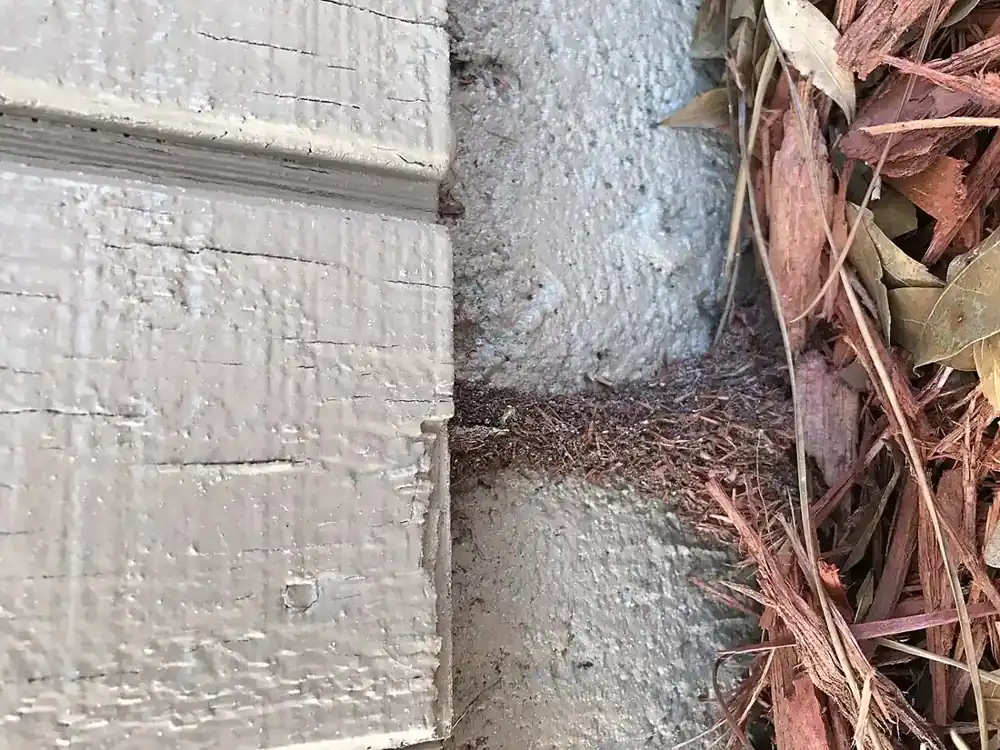
Termites: mud tubes at the foundation, frass piles under eaves, patched or painted-over damage that an inspector's probe finds soft. Rodents: droppings and urine staining in attic insulation, gnawed wiring, grease marks at entries, and the smell that hits when the attic hatch opens.
Roaches and bed bugs leave quieter paper trails: bait placements in cabinet hinges from prior treatments, droppings in appliance motors, shed skins behind headboards. Prior pest service records, when a seller has them, are worth asking for directly.
Findings translate into three standard outcomes: the seller treats before closing, the seller repairs damage, or the price reflects the work. All three require the same thing - a documented report with locations, not a verbal 'there might be termites.'
Timing is the trap. Inspection periods in a purchase contract are short, and reports lead to follow-up quotes. Ordering inspections in the first days of escrow keeps every option open; ordering them in the last week closes most of them.
Move-in is a pest event in itself: boxes from storage carry spiders and stored-product pests, empty homes wake up fleas left by the previous owners' pets, and your irrigation and cooking reset the home's pest map.
A sensible first-ninety-days plan: exclusion walk and seal, a general service visit to establish the baseline, attic check if any rodent evidence was noted, and your termite re-inspection date on the calendar. The home starts your ownership with a clean, documented slate.
California's transfer disclosure asks sellers about known pest problems and damage, and most sellers answer honestly - from what they know. The gap is knowledge, not honesty: a seller who never entered the crawl space cannot disclose the mud tubes growing there, and a seller who treated 'some ants' in 2019 may not know the colony marked a termite-friendly moisture problem.
Your inspections exist to close that gap with evidence. They are not an accusation; they are the same documentation the seller's own next purchase will rely on, and most experienced sellers in Fresno expect both reports as a matter of course.
Reports sort findings into leverage: active infestation is treatment money, structural damage is repair money, and conducive conditions are a negotiating point and a first-year project list. The weakest negotiating position is a vague worry; the strongest is a documented inspection report with locations, photos and scoped quotes attached.
Keep the emotion calibrated, though: in Fresno, a termite finding is a line item, not a verdict on the house. Nearly every older home in the city has a pest history. The homes to walk away from are the ones where damage is structural, concealed or paired with a seller who will not engage - the report tells you which one you are holding.
A good pest inspection buys information at the least expensive moment: before the population peaks, before the purchase closes, before the season turns. The inspector's product is a map - species, locations, entry points, conditions - with each finding tagged as treat, seal, fix or watch. That map converts pest control from an emergency purchase into a managed list, which is the entire economic argument for inspecting when nothing seems wrong.
That is the service side of this guide's problem. When you are ready, the Pest Inspection page carries the process, the coverage by neighborhood and the number to call.
Termite report for the structure, general pest inspection for everything else.
Activity, old damage and risk conditions are three different negotiations.
Quotes based on the reports, in writing, before the inspection deadline.
Exclusion, baseline service and re-inspection dates scheduled from day one.
Contingency periods are short; inspection slots in spring are shorter. Book at offer time.
Thirty minutes walking with inspectors teaches you the house better than the report alone.
Your photos plus their map become the negotiation - and your first-year project list.
Two contractor quotes on active findings turn a vague worry into a number.
Whatever the reports find, its anniversary becomes your annual inspection date.
Pre-purchase pest work is the most worthwhile pest money there is: two inspections price as flat professional services, and their findings convert directly into credits, repairs or price adjustments many times their cost. What varies is the follow-on scope - treatment of an active finding, repair of damaged wood, exclusion of a rodent-used attic - and that is exactly why the inspections come first: they turn unknown risk into priced line items before you own them.
On a purchase, professional inspectors work like investigators building a file. The termite inspector probes and maps the structure - foundation, framing, attic, crawl - separating active findings from history and both from conditions. The general pest inspector covers the living evidence: attic rodent sign, garage and kitchen roach or rodent harborage, bed bug indicators in bedrooms, the yard's wasp and mosquito situation. Both write it down with locations, because the report's job is to be used - by your agent in negotiation, by your lender in underwriting, and by you in your first year of ownership. Attend if you can; the walk teaches the house.
It notes pests in passing. It does not probe framing or issue the wood-destroying organism report.
Inspection slots and lab-thin timelines collide. Order at offer time.
In Fresno it is usually a line item. Structural, concealed or refused findings are the real signals.
Rodents in the attic and roaches in the kitchen do not appear in a termite report.
They are your baseline, your re-inspection calendar and your first-year project list.
Buying a Fresno home means buying its pest history and its pest future. The history is in the wood; the future is in the moisture, the gaps and the neighborhood's pressure - and both are legible, this week, for the price of two inspections. Read them before you sign, negotiate with them in hand, and move in with a calendar instead of a surprise.
Harvest displaces field rodents; roof rats move into Fresno attics every late summer and fall.
Read the GuideBlack widows are a normal part of Fresno garages, woodpiles and block walls.
Read the GuideOften, yes - many lenders require a wood-destroying organism report and clearance of active findings before funding. Even when it is not required, it is the least expensive structural information in the whole transaction.
It is common in Fresno and rarely fatal to a deal. The report scopes the treatment, the parties negotiate who pays, and the work is completed or credited around closing. Undiscovered termites are the expensive kind.
You can look for the surface signs - attic odor, droppings at the water heater, gnawed storage, grease marks - but attics and crawl spaces need a proper inspection to read. Sellers' disclosures plus a report beat a flashlight tour.
Yes - flea pupae from the previous occupants' pets can wait in carpet for months and hatch en masse when footsteps and warmth announce new hosts. It is one of the most common first-week surprises in Fresno rentals and purchases alike.
Fees depend on the home's size and which inspections are ordered, and they are quoted when you book. Against the price of the home - and the cost of inherited infestations - they are among the smallest line items in the purchase.
One call connects you with a pest control professional serving Fresno and the surrounding Valley communities - inspection, treatment, exclusion and prevention.
📞 Call Now